Creating a Nighttime Routine to Help You Drift Off Easier

I’m so tired of seeing “aesthetic” sleep guides that require a $200 silk eye mask, a Himalayan salt lamp, and a strictly choreographed forty-minute meditation session just to close your eyes. If you’re anything like me, the idea of adding a massive, high-maintenance checklist to the end of an already draining workday feels less like “self-care” and more like another job. Most advice on how to create a wind down routine assumes you have the mental bandwidth of a monk, but let’s be real: some nights, you’re just a person who has been staring at a spreadsheet for eight hours and wants to collapse.
I’m not here to sell you on a lifestyle overhaul or a complicated ritual that falls apart the moment you have a late meeting. Instead, I want to share the low-friction, actually sustainable systems I’ve built into my own life to quiet the noise. We’re going to focus on tiny, repeatable wins that work even when you’re running on empty. My goal is to help you figure out how to create a wind down routine that feels like relief, not another item on your to-do list.
Simple Sleep Hygiene Practices for Your Tiredest Nights
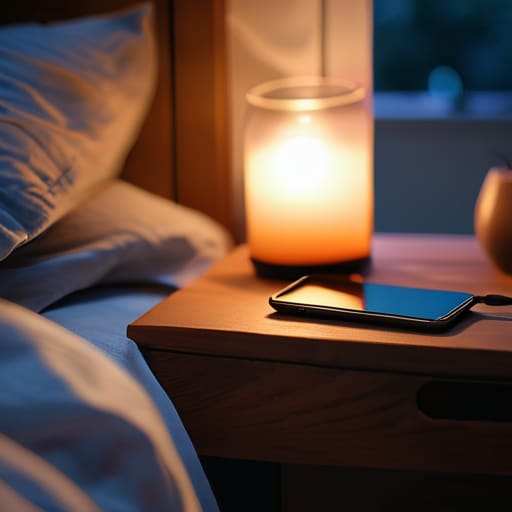
When I’m running on fumes after a long day of back-to-back meetings, the last thing I want to do is follow a rigid, ten-step wellness protocol. On those nights, I focus on the bare minimum of sleep hygiene practices that actually move the needle. Instead of a full digital detox for better sleep—which feels impossible when you just want to scroll for five minutes—I try a “low-friction” version. I’ll set my phone to grayscale and put it on the charger across the room. It’s not about being perfect; it’s about creating just enough distance so I don’t get sucked into a doomscrolling loop.
I also find that small, sensory shifts help immensely with reducing cortisol before sleep. I don’t need a full meditation session; I just dim the lights or swap my bright overheads for a single warm lamp. This simple change signals to my brain that the “workday” version of me is officially off the clock. If I can manage to do just one thing, like a quick stretch or even just tidying my nightstand, it makes the transition into rest feel a little less chaotic.
Small Ways of Reducing Cortisol Before Sleep

I’m not a big fan of the “biohacking” crowd that treats sleep like a high-stakes science experiment, but I do understand the physiological reality of feeling “tired but wired.” When my brain is still looping through my to-do list or that one awkward thing I said in a meeting three years ago, I know it’s because my cortisol is spiking at the worst possible time. Instead of trying to force myself into a deep meditative state—which usually just makes me more frustrated—I focus on reducing cortisol before sleep through low-stakes sensory shifts.
For me, this usually looks like a very loose version of a digital detox for better sleep. I don’t do the whole “no screens after 8 PM” thing because, frankly, I have a life. But I will swap the doomscrolling for something tactile. Sometimes that’s tending to my plants or just sitting with a physical book. The goal isn’t to achieve enlightenment; it’s just to signal to my nervous system that the workday is officially over. It’s about lowering the internal volume so my body can actually start the process of winding down on its own.
Low-Friction Habits That Actually Stick
- The “One-Minute Tidy.” Don’t try to deep clean your apartment at 9 PM. Just set a timer for sixty seconds to clear your desk or put your coffee mug in the dishwasher. It stops the morning-after clutter anxiety from hitting you the second you wake up.
- Digital Sunset (The Lazy Version). If you can’t commit to no screens, just turn on your phone’s grayscale mode. It makes scrolling through social media incredibly boring, which is exactly the point. It removes the dopamine hit that keeps you awake.
- Pre-Set Your “Morning Self.” I do this every night to reduce decision fatigue. Lay out your clothes, pack your bag, or just decide what you’re having for breakfast. It’s a gift to your future, less-tired self.
- Brain Dumping onto Paper. Since I always carry my physical planner, I use it to offload the “mental tabs” I have open. If a task or a worry pops up, write it down. Once it’s on the paper, your brain doesn’t have to work so hard to keep it in active memory.
- Sensory Anchors. Find one non-digital thing that signals “the day is over.” For me, it’s switching to a specific dim lamp or putting on a certain pair of comfortable socks. It’s a tiny, repeatable cue that tells your nervous system it’s okay to settle down.
The Bottom Line
Forget the 10-step luxury rituals; if you can only manage one thing, make it a consistent “brain dump” in your planner to stop your mind from racing.
Build a routine for your worst days, not your best ones—aim for systems that require zero willpower when you’re already running on empty.
Focus on small, physical shifts like dimming the lights or putting your phone in another room rather than trying to overhaul your entire lifestyle overnight.
Finding Your Own Rhythm

At the end of the day, building a wind-down routine isn’t about checking off a dozen boxes or performing some elaborate, aesthetic ritual you saw on social media. It’s really just about lowering the stakes. Whether you’re dimming the lights, putting your phone in another room, or just taking five minutes to write down your to-do list so it stops looping in your brain, the goal is the same: reducing friction between your busy day and your rest. You don’t need a perfect, ten-step system to see a difference; you just need a few low-effort habits that feel sustainable even when your brain is fried and your energy is at zero.
Please, give yourself some grace if you miss a night or if your routine falls apart when life gets chaotic. Systems are supposed to serve you, not become another source of guilt on your to-do list. If you can only manage to brush your teeth and crawl into bed, that is a win. The most effective routine is the one that actually happens, not the one that looks perfect on paper. Focus on those small, repeatable wins, and let the rest go. You’re doing better than you think you are.
Frequently Asked Questions
What if I don't have an hour to spare for a routine every single night?
Honestly? Don’t even try to force a full hour. That’s how routines go to die. If you’re running on fumes, a sixty-minute ritual feels like another chore on your to-do list, and that just creates more stress. Instead, aim for a “micro-routine.” Pick two non-negotiables—like dimming the lights and putting your phone in another room—that take five minutes total. It’s about consistency, not duration. Small wins beat a perfect routine you never actually do.
How do I stop my brain from racing about tomorrow's to-do list the second my head hits the pillow?
I call this the “Brain Dump and Close” method. Keep a physical notebook and a pen right on your nightstand—no phones allowed. When those “don’t forget to…” thoughts start spiraling, write them down immediately. Getting them out of your head and onto paper signals to your brain that the information is safe and doesn’t need to be actively looped. Once it’s on the page, tell yourself: “It’s handled until tomorrow.”
Is it actually worth ditching my phone if I feel like scrolling is the only way I can decompress?
Honestly? If scrolling is your only way to decompress, a total digital detox will probably just leave you feeling restless and frustrated. That’s not a system; that’s a chore. Instead of ditching the phone entirely, try changing how you use it. Swap the infinite scroll for something finite—like a single chapter of an e-book or a specific podcast. It gives your brain that same “escape” without the dopamine loop that keeps you awake.


I believe that life doesn't need to be optimized to perfection, just made slightly more manageable. My goal is to help you find systems that actually work when you're tired, not just when you're motivated. Let's focus on small, repeatable wins that clear the path for what actually matters.