Morning Stretching Routines to Energize Your Body and Mind

I used to see those “perfect” wellness influencers posting videos of their 45-minute, sun-drenched yoga flows, and honestly? It just made me want to stay under my duvet. The idea that you need a designer mat and an hour of meditative silence just to do some morning stretches feels like a massive barrier to actually feeling human. I’ve spent way too many mornings feeling like a rusted hinge because I thought if I couldn’t do a full ritual, it wasn’t worth doing at all.
I’m not here to sell you on a lifestyle overhaul or a complicated sequence that requires more energy than you actually have at 7:00 AM. Instead, I want to share the low-effort movements that actually work for me when my brain is foggy and my back feels tight from sitting at a desk all day. We’re going to focus on small, repeatable wins—the kind of stretches you can do in your pajamas while the coffee is still brewing—to help you clear that morning brain fog without the unnecessary fluff.
Gentle Morning Yoga Poses for a Low Energy Start
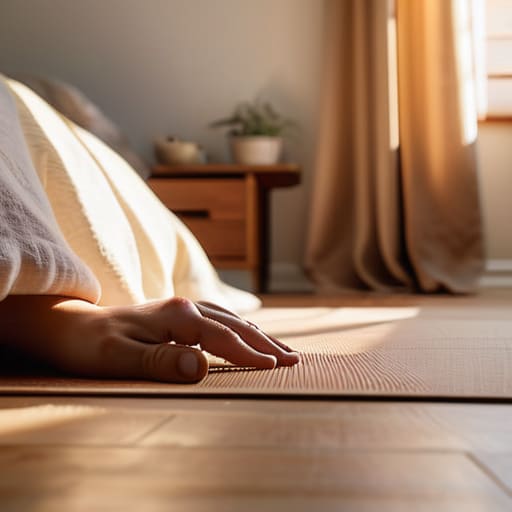
If you aren’t quite ready to tackle a full-blown workout, don’t force it. I’ve learned the hard way that trying to do a high-intensity flow when your brain is still foggy just leads to frustration. Instead, I stick to a few gentle morning yoga poses that I can do right next to my bed. Starting with a Child’s Pose or a simple Cat-Cow sequence helps me wake up my spine without feeling like I’m performing for an audience. It’s less about the perfect form and more about releasing that initial tightness that settles in overnight.
Once I feel a little more grounded, I usually move into a seated side stretch. This is my go-to for a bit of stretching for energy boost because it opens up my ribcage and makes breathing feel a lot less restricted. You don’t need a fancy mat or a dedicated studio space; honestly, even doing these movements in your pajamas on the rug is a win. The goal isn’t to master a complex asana, but to signal to your nervous system that the day has officially begun.
Stretching to Reduce Stiffness Without Leaving Your Bed

Look, some mornings the mere thought of standing up feels like a personal affront. If you aren’t ready to face the floor or a yoga mat yet, don’t force it. You can actually start your morning mobility routine without even throwing off the duvet. I’ve found that just staying under the covers for five minutes to do some slow, intentional movements makes a massive difference in how my joints feel by noon.
Start with some simple ankle circles and gentle knee pulls toward your chest. It’s not about a high-intensity workout; it’s about stretching to reduce stiffness while your brain is still catching up to your body. I like to focus on long, slow breaths here—it’s less about the physical exertion and more about signaling to my nervous system that we are actually awake now. If you can manage a slight spinal twist while still lying flat, even better. These tiny, low-stakes movements are much more effective for long-term consistency than trying to jump into a complex routine when you’re still half-asleep.
Five ways to actually make this stick (without the guilt)
- Don’t aim for a “routine.” Just aim for one movement. If you only manage a single neck roll before your coffee hits, call it a win and move on. Consistency is about showing up, even if you’re just doing the bare minimum.
- Use your environment as a trigger. I started doing calf stretches while my kettle boils or my toast pops. It turns a mindless waiting period into a tiny moment of movement so you don’t feel like you’re adding “another task” to your to-do list.
- Keep your gear within reach. If you use a foam roller or a yoga mat, don’t hide it in the back of a dark closet. Leave it out where you can see it. If you have to hunt for your equipment, you’ve already lost the mental battle.
- Forget the “perfect” form. If you’re feeling particularly stiff or unmotivated, don’t worry about whether your alignment is textbook perfect. Just move enough to feel the tension release. A messy stretch is infinitely better than no stretch at all.
- Listen to your body’s actual capacity. Some mornings you’ll feel like an athlete; most mornings, you’ll feel like a slightly broken piece of furniture. Both are fine. Adjust your intensity based on how much energy you actually have, not how much you think you should have.
The Low-Friction Approach to Movement
Forget the idea of a “perfect” workout; if you only have two minutes to move your limbs so you don’t feel like a rusted hinge, that counts as a win.
Meet your body where it is—if you’re too exhausted to get out of bed, do your stretches under the covers rather than skipping the movement entirely.
Focus on consistency over intensity by choosing small, repeatable stretches that actually fit into your morning chaos instead of a rigid routine you’ll quit by Wednesday.
The Bottom Line

Look, if you tried the yoga poses or the bed stretches and still felt like a zombie, that’s okay. The whole point of this isn’t to turn you into a professional athlete by 7:00 AM; it’s just about moving the needle slightly in your favor. Whether you did a full five-minute flow or just reached for your toes while waiting for the kettle to boil, you’ve already done more than most people do on a Tuesday. The goal is to pick the one or two movements that actually feel good and make them your default setting for those mornings when your brain refuses to fully boot up.
At the end of the day, don’t let the pursuit of a “perfect” wellness routine become just another item on your to-do list that makes you feel guilty. Life is messy, and some mornings are just going to be about survival. If you can manage to loosen up your neck or stretch out your lower back for sixty seconds, you’ve won. Focus on those small, repeatable wins that make your body feel a little less like a rusted hinge. You don’t need to optimize your entire existence; you just need to make it slightly more manageable, one stretch at a time.
Frequently Asked Questions
Is it actually okay to stretch if I haven't had my coffee or a glass of water yet?
Look, I get it. Sometimes the goal is just to move without feeling like a human pretzel. Honestly? It’s fine. You don’t need to be fully hydrated or caffeinated to do some gentle mobility work. Just listen to your body—if you feel lightheaded or dizzy, stop immediately. I usually aim for a quick glass of water first just to wake up my system, but if you’re too tired for that, just don’t push it.
How long do I actually need to do this before I start feeling less like a rusted hinge?
Look, I’m not going to give you some “it takes 21 days to form a habit” nonsense. Realistically? You’ll feel a tiny bit more human after just one session. But the real magic happens when you stop treating it like a workout and start treating it like maintenance. If you do even two minutes most mornings, you’ll notice that mid-afternoon “stiff as a board” feeling starts to fade within a week or two.
What if I feel a sharp pain instead of just that "good" muscle tension?
Stop immediately. If you feel a sharp, stabbing, or electric sensation, that is your body’s way of pulling the emergency brake. That’s not “productive” tension; that’s a signal to back off. Don’t try to “work through it”—that’s how a minor niggle becomes a week-long injury. Just freeze, breathe, and let the muscle settle. If it stays sharp even when you’re resting, skip the stretches entirely and just call a professional.


I believe that life doesn't need to be optimized to perfection, just made slightly more manageable. My goal is to help you find systems that actually work when you're tired, not just when you're motivated. Let's focus on small, repeatable wins that clear the path for what actually matters.