A Guide to Making Exercise a Permanent Part of Your Life

I am so tired of the “all-or-nothing” fitness culture that treats a single missed workout like a moral failure. We’ve all seen those influencers preaching about 5:00 AM sunrise runs and grueling, hour-long HIIT sessions that require a level of discipline most of us simply don’t have after a ten-hour workday. It’s exhausting, and honestly, it’s a lie that makes most people quit before they even start. If you’re struggling with how to build an exercise habit that doesn’t feel like a second, unpaid job, you aren’t lazy—you’re just being sold a version of fitness that isn’t sustainable for real life.
I’m not here to give you a roadmap to a marathon or a way to optimize your body like a piece of hardware. Instead, I want to share the low-friction systems I’ve actually used to stay moving when my brain is fried and my motivation is non-existent. I’ll show you how to focus on small, repeatable wins that fit into the cracks of a busy schedule. We’re going to skip the hype and focus on building a routine that actually works even on your worst days.
Using Behavioral Psychology of Habit Formation to Work With Your Brain
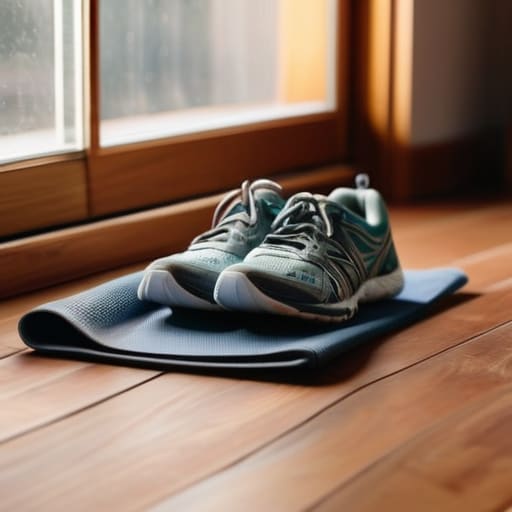
We tend to treat willpower like a muscle that never gets tired, but in reality, it’s a finite resource that runs out by 5:00 PM. Instead of trying to white-knuckle your way through a grueling gym session, I’ve learned to lean into the behavioral psychology of habit formation. Your brain is wired to seek the path of least resistance; if a workout feels like a massive mountain to climb, your subconscious will find every excuse to skip it. The trick isn’t to fight your biology, but to trick it into thinking the task is trivial.
One of my favorite ways to do this is through habit stacking for exercise. Rather than treating a workout as a standalone, daunting event, I anchor it to something I already do without thinking—like putting on my sneakers immediately after my morning coffee. By tethering a new movement to an existing ritual, you stop relying on fleeting bursts of motivation and start relying on existing neurological pathways. It’s about making the “start” so small that it feels almost silly to say no.
Setting Realistic Fitness Goals for Your Tiredest Days

The biggest mistake I see people make is planning their fitness around their “best self”—that version of you that has endless energy, a perfectly clean kitchen, and a pristine gym outfit. But that person doesn’t exist on a Tuesday night after a back-to-back meeting marathon. When you’re running on fumes, your goals need to scale down immediately. Instead of aiming for a sixty-minute heavy lifting session, aim for ten minutes of mobility work or even just a walk around the block. The objective isn’t the intensity; it’s about overcoming workout motivation barriers by lowering the bar so far that it feels impossible to fail.
This is where setting realistic fitness goals becomes a survival skill rather than just a planning tip. If your baseline is too high, you’ll skip the hard days, and skipping the hard days is exactly how momentum dies. I’ve learned to create a “low-power mode” for my routine. On days when I’m exhausted, I don’t quit; I just pivot to the absolute minimum required to keep the streak alive. It’s about protecting the habit, not perfecting the performance.
Five Low-Friction Ways to Actually Get Moving
- Use “habit stacking” to tie your movement to something you already do without thinking. If I’m waiting for my morning coffee to brew, I do ten squats. If I’m on a non-video call, I pace my living room. You aren’t adding a new task; you’re just piggybacking on an old one.
- Stop aiming for the hour-long gym session. On the days when my brain is fried and my to-do list is a mile long, I tell myself I only have to do five minutes. Usually, once I start, I keep going—but even if I don’t, I still checked the box.
- Prep your environment the night before so there’s one less decision to make in the morning. I leave my sneakers right by my desk or my yoga mat rolled out in the middle of the floor. If I have to hunt for a clean pair of socks, I’m probably going to bail.
- Find your “minimum viable movement.” This is your fallback plan for when life hits the fan. It might just be a walk around the block or a quick stretch session while watching TV. It keeps the momentum alive without requiring any actual willpower.
- Focus on how you feel afterward, not how you look in the mirror. I stopped tracking calories and started tracking my mood. If a quick walk clears the mental fog from a stressful meeting, that’s a win. That feeling is much more motivating than a number on a scale.
The Bottom Line
Forget the “all-or-nothing” mindset; if you can’t do a full workout, just do five minutes of stretching. Doing something small keeps the habit alive, which is more important than the intensity of the session.
Design your environment to do the heavy lifting for you. If your sneakers are already by the door or your yoga mat is unrolled, you’ve removed one more tiny friction point that usually stops you from starting.
Focus on consistency over perfection. A mediocre workout that actually happened is infinitely more useful for your long-term routine than a “perfect” one that you skipped because you were too exhausted to face it.
Finding Your Rhythm
At the end of the day, building a movement habit isn’t about finding some magical, high-octane motivation that lasts forever; it’s about working with your biology instead of against it. We’ve talked about using behavioral cues to make starting easier, setting goals that don’t feel like a punishment, and most importantly, lowering the bar when life inevitably gets messy. You don’t need a perfect streak or a fancy gym membership to be successful. You just need a system that is resilient enough to survive your worst, most exhausted Tuesdays. If you can show up for even five minutes on the days you want to quit, you’re already winning the long game.
Please, give yourself some grace here. There will be weeks where your routine falls apart, and that is perfectly okay. The goal isn’t to become a person who never misses a workout; the goal is to become someone who knows how to get back on track without the spiral of guilt. Focus on those small, repeatable wins that make you feel a little more capable and a little less overwhelmed. Life is going to keep throwing friction your way, so let’s just focus on making the movement part one less thing to stress about.
Frequently Asked Questions
What do I do when I actually miss a day—does that mean I've officially broken the streak?
Look, here’s the truth: missing a day isn’t a failure; it’s just life happening. I used to obsess over my streaks, thinking one missed session meant the whole system was broken. It’s not. If you view a streak as a fragile glass ornament, you’ll stop trying the moment it cracks. Instead, treat it like a data point. Don’t try to “make up” for it with a grueling double session. Just show up tomorrow.
How do I find the energy to work out when my job has me feeling completely drained by 5:00 PM?
The truth is, you probably won’t find that “burst of energy” sitting on your couch at 5:00 PM. If you wait to feel motivated, you’re going to lose. Instead, I focus on reducing the friction between my desk and my workout. Change into your gear before you log off, or pack your bag the night before. Don’t aim for an hour; aim for ten minutes of movement. Just get the momentum started.
Do I really need a gym membership to see results, or can I actually make this work from my living room?
Honestly? You definitely don’t need a gym membership. For me, the biggest barrier to working out is the “friction” of getting ready, driving somewhere, and navigating a crowded weight room. If I’m feeling depleted, that extra effort is a non-starter. You can get incredible results with just a pair of dumbbells or even just bodyweight exercises in your living room. Focus on the movement, not the venue. If it happens in your pajamas, it still counts.


I believe that life doesn't need to be optimized to perfection, just made slightly more manageable. My goal is to help you find systems that actually work when you're tired, not just when you're motivated. Let's focus on small, repeatable wins that clear the path for what actually matters.