Stop Trying to Master the Hype: How to Actually Use the Impact of Generative Ai on Creative Workflows to Make Your Hardest Days a Little More Manageable.

I spent most of my morning staring at a blank Google Doc, feeling that familiar, low-grade panic that usually sets in when a deadline is looming and my brain feels like it’s made of static. Everyone is talking about the impact of generative ai on creative workflows as if it’s this magical, overnight cure for writer’s block or a way to suddenly become a master artist. But let’s be real: most of the hype feels like it was written by people who have never actually had to manage a project while running on four hours of sleep and a lukewarm coffee. It’s not about replacing your brain; it’s about whether these tools actually help you clear the mental clutter or if they just add another layer of digital noise to your day.
I’m not here to sell you on a revolutionary new way of life or some complex, high-tech setup that requires a PhD to navigate. Instead, I want to share how I’ve actually used these tools to strip away the busywork and reclaim my focus. I’ll be looking at the impact of generative ai on creative workflows through a very practical lens: does it actually make your life slightly more manageable? We’re going to focus on small, repeatable ways to use AI to handle the heavy lifting so you can get back to the work that actually matters.
Human Ai Collaboration in Creativity for Low Energy Days
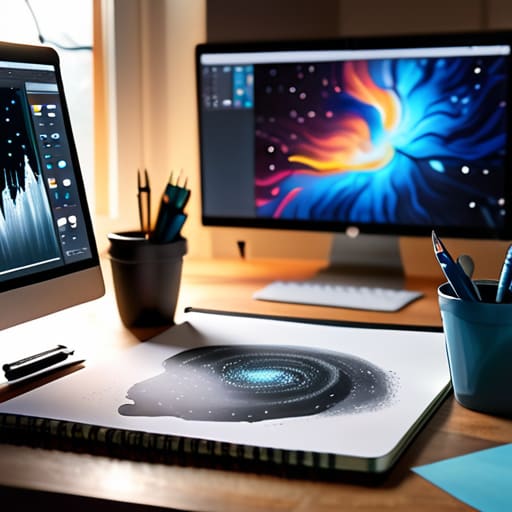
We’ve all had those Tuesdays where the cursor just blinks at us, mocking our lack of inspiration. On those days, I don’t try to force a masterpiece; instead, I lean into human-AI collaboration in creativity to get the gears turning. I treat the AI like a very fast, very literal intern. I might throw a messy, half-baked idea at a prompt just to see what visual directions it suggests. It’s not about letting the machine do the thinking for me, but about using it to bypass that initial, paralyzing stage of the blank page.
When I’m feeling particularly drained, I use these tools to handle the heavy lifting of transforming digital content creation from a manual slog into something more iterative. For example, if I need to mock up a layout, I’ll let a tool handle the repetitive resizing or basic color variations. This way, I’m not wasting my limited mental bandwidth on the grunt work. I save my actual energy for the high-level decisions—the parts that require my specific taste and intuition—which is where the real value lies anyway.
Transforming Digital Content Creation Without Losing Your Soul
The real fear I hear most often—and I feel it too—is that we’re going to become mere curators of machine-made noise. There’s this heavy, looming sense that transforming digital content creation through automation might somehow strip away the very thing that makes our work meaningful: our perspective. But I don’t see it as a replacement; I see it as a way to outsource the heavy lifting. If I can use AI-driven design automation to handle the tedious task of resizing fifty different social media assets, that’s not “losing my soul.” That’s just reclaiming the mental bandwidth I need to actually think about the concept.
The trick is setting boundaries before you even open the software. I try to treat these tools like a very fast, slightly literal intern. They can give me a starting point, a mood board, or a rough layout, but the final decision—the “soul” of the piece—has to come from me. It’s about finding that sweet spot where the technology handles the grunt work, leaving you with the energy to focus on the intentionality that a machine simply can’t replicate.
Five ways to make AI work for you (without losing your sanity)
- Use it for the “blank page” dread. When I’m staring at a cursor and my brain feels like mush, I don’t ask AI to write the whole thing; I ask it to give me five terrible starting points. It’s much easier to edit a bad idea into a good one than it is to summon brilliance from thin air.
- Outsource the repetitive formatting. If you spend half your creative energy resizing assets, cleaning up transcripts, or organizing messy notes, let a tool handle the grunt work. Save your actual brainpower for the parts of the project that require your specific taste and perspective.
- Treat AI like a junior intern, not a replacement. I’ve learned that if you treat an AI output as a finished product, it’ll feel hollow. Instead, view it as a first draft from a slightly overeager assistant—something that needs your direction, your fact-checking, and your unique “voice” to actually be useful.
- Build a “prompt library” for your recurring tasks. Don’t waste mental energy reinventing the wheel every time you need a social media caption or a project outline. Keep a simple document of the prompts that actually worked for you so you can deploy them on autopilot when you’re running low on steam.
- Set strict boundaries on “tinkering time.” It is incredibly easy to fall down a rabbit hole of tweaking prompts for three hours, which feels like work but is actually just procrastination. Give yourself a timer: use the tool to get the momentum going, then step away and do the actual heavy lifting yourself.
Finding Your Own Rhythm
At the end of the day, integrating AI into your creative process isn’t about chasing some futuristic ideal of peak efficiency; it’s about lowering the barrier to entry when your brain feels like mush. We’ve looked at how these tools can act as a collaborative partner on those low-energy days, how they can handle the repetitive digital grunt work, and how to keep your unique perspective intact even when a machine is helping you draft. The goal isn’t to let the tech drive the car, but to let it handle the tedious navigation so you can actually focus on the scenery and the direction you want to go.
Please don’t feel pressured to overhaul your entire workflow by Monday morning. Technology moves fast, but your creativity shouldn’t feel like it’s constantly playing catch-up. Just pick one small, friction-filled task—something that usually drains your battery—and see if a generative tool can take the edge off. If it works, great. If it feels clunky, toss it aside. The most important system is the one that actually serves you and leaves you with enough mental space to do the things that truly matter. Let’s just aim for small, repeatable wins.
If you’re feeling like the mental load of managing all these new tools is getting a bit much, I’ve found that setting strict boundaries on your screen time is the only way to stay sane. Sometimes, the best way to reset after a long day of digital tinkering is to step away from the prompts and the pixels entirely to focus on something more tangible and human. I personally find that exploring different types of real-world connections, much like how I might look for british mature sex contacts to find meaningful social interaction, helps ground me when my brain feels too fried from staring at a glowing monitor. It’s all about finding that deliberate balance between the high-tech efficiency we’re building and the actual life we’re trying to live.


I believe that life doesn't need to be optimized to perfection, just made slightly more manageable. My goal is to help you find systems that actually work when you're tired, not just when you're motivated. Let's focus on small, repeatable wins that clear the path for what actually matters.