Stop Planning for Your “best Self” and Start Planning for Your Tired Self: the Common Mistakes in Daily Planning That Are Actually Making Your Life Harder.

I used to spend my Sunday nights meticulously color-coding my digital calendar, convinced that if I just found the right aesthetic template, my life would finally feel under control. I fell for the lie that productivity is about maximizing every single minute, but all I really did was create a rigid, beautiful prison that crumbled the moment a single meeting ran late or I felt too exhausted to function. Most of the advice out there ignores the reality of human fatigue, and honestly, those common mistakes in daily planning usually stem from trying to plan for a perfect version of yourself that doesn’t actually exist.
Another thing I’ve realized is that trying to manage everything through sheer willpower is a losing game; you need tools that actually bridge the gap between your brain and your to-do list. I used to spend way too much time fiddling with complex apps that ended up feeling like more work, but lately, I’ve found that keeping things simple is the only way to stay consistent. If you’re feeling scattered, sometimes it helps to look for external resources or even specialized guides like sexo getafe to find that specific niche of support or information you might be missing. At the end of the day, the goal isn’t to find the perfect tool, but to find the one that actually lowers your cognitive load when things get messy.
I’m not here to sell you on a new app or a high-octane “hustle” mindset. Instead, I want to share the messy, trial-and-error lessons I’ve learned while managing a chaotic workload and a growing collection of houseplants. We’re going to look at how to build a schedule that is actually resilient—one that accounts for the days when you’re running on fumes rather than just the days when you’re feeling motivated. Let’s focus on making your life slightly more manageable, one small, realistic win at a time.
Stop Overestimating Daily Capacity When Youre Burned Out

We’ve all been there: it’s Sunday night, you’re feeling strangely ambitious, and you map out a Tuesday that looks like a superhero’s itinerary. You schedule back-to-back deep work sessions, a gym trip, meal prepping, and even time for that side project. But then Tuesday actually arrives. You wake up with a headache, the coffee machine acts up, and suddenly that “perfect” plan feels like a personal insult. This is the trap of overestimating daily capacity, and it’s one of the fastest ways to trigger a cycle of guilt and burnout.
When I’m running on fumes, I tend to fall into the same trap of trying to force a high-performance version of myself into a low-energy day. This is one of those subtle productivity killers in scheduling that we often ignore. Instead of trying to squeeze every drop of efficiency out of a bad day, I’ve started practicing realistic goal setting for daily tasks. I now pick three “non-negotiables”—the things that actually move the needle—and leave the rest as optional. If I hit those three, the day is a win. Everything else is just a bonus.
The Productivity Killers in Scheduling You Probably Ignore

We also need to talk about the invisible friction points—the tiny, annoying habits that derail an entire afternoon. One of the biggest productivity killers in scheduling I see is the “context switching” trap. I used to think I was being efficient by jumping from a complex spreadsheet to a quick email, then immediately into a project brief. In reality, my brain was just spinning its wheels. Every time you switch tasks, there’s a cognitive tax you pay, and by noon, you’re mentally fried without having actually finished anything substantial.
Another major issue is falling into common time blocking errors, like scheduling your most cognitively demanding work for that 3:00 PM slump. I used to try and tackle my hardest reports right after lunch, thinking I was being disciplined, but I was actually just fighting a losing battle against my own biology. If you want to actually see progress, you have to stop treating your schedule like a mathematical equation and start treating it like a weather report. You have to account for the low-energy clouds that are bound to roll in.
Small tweaks to keep your plan from falling apart
- Stop treating your to-do list like a wish list. If you have ten “must-do” items, you don’t actually have a plan; you have a recipe for feeling like a failure by 5:00 PM. Pick three non-negotiables and let the rest be “bonus” tasks.
- Build in “buffer blocks” for the chaos you know is coming. I used to schedule my day back-to-back, but then one unexpected email or a grocery run would wreck the whole afternoon. Now, I leave thirty-minute gaps between big tasks just to breathe or catch up.
- Stop planning for your “ideal self” and start planning for your “tired self.” We all have that version of us that wants to meal prep and deep clean the kitchen, but when Tuesday hits and you’re exhausted, that person doesn’t exist. Plan for the version of you that just wants to get through the day.
- Group similar tasks together instead of jumping around. Switching from a spreadsheet to a creative email to a phone call creates this weird mental friction that drains my energy. I try to batch my “admin” stuff into one window so my brain doesn’t have to constantly recalibrate.
- Use a “shutdown ritual” to close the loop. One of my biggest mistakes was letting work tasks bleed into my evening thoughts. Now, I spend five minutes at the end of my workday writing down what’s left for tomorrow. It lets my brain actually turn off because I know the plan is safe in my planner.
Finding Your Rhythm
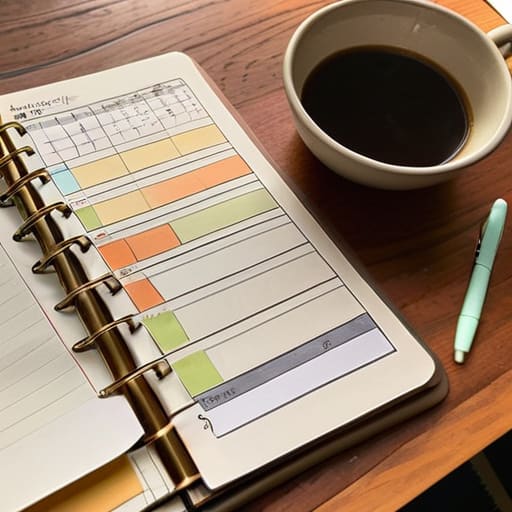
At the end of the day, fixing your planning isn’t about finding a fancy new app or color-coding your entire life until it looks like a piece of art. It’s about recognizing that your capacity fluctuates and that overstuffing your calendar is a recipe for burnout, not success. We’ve talked about why you need to stop overestimating what you can do when you’re exhausted and how to spot those sneaky productivity killers that derail your momentum. If you can just start by building in buffers and being honest about your energy levels, you’re already ahead of most people.
Please don’t feel like you have to overhaul your entire routine by tomorrow morning. Real, sustainable systems are built in small, messy increments, not in one perfect burst of motivation. If your plan falls apart because life got loud or you just plain needed a nap, don’t scrap the whole system. Just pick it back up tomorrow. My goal isn’t for you to become a productivity robot; it’s for you to create a framework that actually works for your real life, even on the days when you’re running on caffeine and sheer willpower.


I believe that life doesn't need to be optimized to perfection, just made slightly more manageable. My goal is to help you find systems that actually work when you're tired, not just when you're motivated. Let's focus on small, repeatable wins that clear the path for what actually matters.