Building Discipline for the Days When Motivation Disappears

I used to spend way too much money on leather-bound planners and productivity apps that promised to revolutionize my life, only to abandon them three days later when my actual life got messy. There is this toxic idea floating around that learning how to be more disciplined requires a complete personality transplant or a 5:00 AM cold plunge. Honestly, that’s just a recipe for burnout. I’ve realized that most “discipline” advice is written for people who have zero responsibilities and infinite willpower, which is not how real life works when you’re managing a career and a household.
I’m not here to sell you on a lifestyle overhaul that feels impossible to maintain. Instead, I want to share the small, unglamorous systems I’ve built to keep my head above water when I’m running on fumes. We aren’t going for perfection; we are looking for repeatable wins that actually stick. I’m going to show you how to build a framework for discipline that works even on your worst, most unmotivated days, so you can finally stop fighting yourself and just get things done.
Small Wins Habit Formation Strategies for Tired Days

The mistake I made early in my career was thinking discipline meant a massive, sweeping overhaul of my entire life. I’d wake up at 5:00 AM, hit the gym, and try to crush a ten-step morning routine, only to crash by noon. Real habit formation strategies aren’t about that initial burst of adrenaline; they’re about what happens when you’re staring at a pile of laundry at 8:00 PM and just don’t want to move.
Instead of aiming for a perfect daily routine for productivity, I started focusing on “micro-habits.” If I can’t manage a full workout, I’ll do five minutes of stretching. If I can’t clean the whole kitchen, I’ll just clear the drying rack. These tiny, low-stakes actions act as anchors for your willpower. They prevent the total collapse of your momentum. When you focus on these small, repeatable wins, you aren’t just checking a box; you’re proving to yourself that you can show up, even on the days when you’re running on fumes.
Low Stakes Goal Setting for Consistency and Peace

When I used to set goals, I’d write down massive, sweeping ambitions in my planner—things like “master a new language” or “complete a 10-step morning routine.” By Wednesday, I’d be too burnt out to even find my coffee mug, let alone learn French. Now, I focus on goal setting for consistency rather than intensity. I’ve learned to aim for “micro-goals” that feel almost too easy to fail. If my goal is to tidy the living room, the “low-stakes” version is just clearing off the coffee table. It keeps the momentum alive without triggering that immediate urge to procrastinate.
This shift isn’t about being lazy; it’s about protecting your mental bandwidth. When you set the bar ridiculously low, you stop viewing discipline as a grueling test of character and start seeing it as a series of manageable tasks. This approach is one of the most effective overcoming procrastination techniques I’ve found because it removes the intimidation factor. You aren’t fighting your brain; you’re just working with it, building a rhythm that survives even your most chaotic work weeks.
Five ways to actually stick to things (without the burnout)
- Stop relying on willpower and start using “environmental cues.” If I want to remember to take my vitamins, I don’t try to “remember” them; I put the bottle right next to my coffee maker. If you want to work out, lay your clothes out the night before. Make the right choice the easiest one to make.
- Use the “Two-Minute Rule” for when you’re feeling paralyzed. If a task takes less than two minutes—like answering a quick email or putting a dish in the dishwasher—just do it immediately. It prevents that tiny, nagging mental clutter from building up into a mountain of dread.
- Build “friction” into your bad habits. Discipline isn’t just about doing more; it’s about doing less of what drains you. If I spend too much time scrolling on my phone, I move my charger to a different room. If it’s harder to get to the distraction, you’re much less likely to default to it.
- Schedule “buffer zones” into your day. One mistake I made early in my career was back-to-back scheduling. When one thing runs over, the whole day collapses, and I lose all discipline. Leave 15-minute gaps between tasks. It gives you space to breathe and keeps one small delay from ruining your momentum.
- Forgive the slip-ups immediately. You’re going to miss a day. You’re going to eat the junk food or skip the gym. The difference between a system that works and one that fails is how you react. Don’t let a bad Tuesday turn into a bad week. Just reset at the next available opportunity.
The Bottom Line: Systems Over Willpower
Stop aiming for “perfect” discipline and start aiming for “repeatable” systems; if a habit is too hard to do on your worst day, it’s too big for your current routine.
Focus on lowering the barrier to entry for your goals so that even when you’re mentally drained, the smallest version of the task still feels doable.
Prioritize consistency over intensity—a tiny, mediocre win is always better for your momentum than a massive effort that leads to immediate burnout.
The Long Game
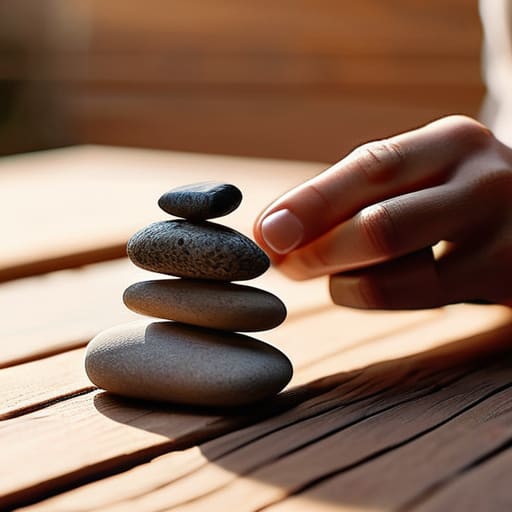
At the end of the day, discipline isn’t about some dramatic, overnight transformation or forcing yourself into a rigid, soul-crushing schedule. It’s really just about the small, quiet choices we make when nobody is watching—like choosing a low-stakes goal over an impossible one, or opting for a tiny habit that actually fits into your life even when you’re running on empty. We’ve talked about building systems for your tired days and setting goals that don’t leave you feeling defeated by Tuesday. If you can master the art of the small, repeatable win, you’ve already done the hard part. Focus on reducing the friction in your daily routine rather than trying to overhaul your entire personality.
Please, be kind to yourself when things inevitably go sideways. There will be weeks where your planner stays closed and your habits fall apart, and that’s okay. Real discipline isn’t a straight line upward; it’s the ability to gracefully restart after a setback without letting a single bad day turn into a bad month. You don’t need to be perfect to be productive, and you certainly don’t need to be a machine to be successful. Just aim to make things slightly more manageable tomorrow than they were today. That’s where the real progress happens.
Frequently Asked Questions
How do I stop feeling guilty on the days when my "small wins" aren't enough and I just can't get anything done?
Look, I’ve been there. I’ve stared at my planner feeling like a failure because I couldn’t even manage to water my plants, let alone tackle a project. Here’s the truth: guilt is just wasted energy you could be using to recover. If you can’t do the “small wins,” your only job is to stop the spiral. Accept that today is a maintenance day, not a growth day. Rest without the mental tax.
What do I do when my environment—like a messy apartment or a loud workspace—makes it impossible to stick to my systems?
When my apartment feels like a disaster zone or my neighbors start drilling, my systems usually go out the window. Instead of fighting the chaos, I lean into “environment hacking.” If the desk is messy, I move to the kitchen table—a fresh surface helps. If it’s too loud, I put on brown noise or heavy-duty headphones. Don’t try to fix the whole room; just create a tiny, controlled micro-environment where you can actually breathe.
How can I tell the difference between actual burnout and just needing a bit more discipline to get through a slump?
Honestly, it’s a fine line. If you’re just procrastinating because the task feels heavy, that’s usually a discipline slump—you can fix that with a tiny, low-stakes win. But burnout feels different. It’s not just “I don’t want to do this”; it’s “I physically and mentally cannot care about this anymore.” If even the things you usually love feel like chores, stop trying to “discipline” your way out of it. You don’t need a better system; you need rest.


I believe that life doesn't need to be optimized to perfection, just made slightly more manageable. My goal is to help you find systems that actually work when you're tired, not just when you're motivated. Let's focus on small, repeatable wins that clear the path for what actually matters.