Effective Strategies for Cutting Down Screen Time
I was sitting on my floor last Tuesday, surrounded by half-replanted succulents and a disassembled mechanical keyboard, when I realized I’d been scrolling through mindless short-form videos for forty-five minutes. I wasn’t even enjoying it; I was just stuck. Most “experts” will tell you that the secret to how to reduce screen time is some radical, monastic digital detox or buying a $200 “dumb phone” to reclaim your soul. Honestly? That’s nonsense. For people with actual jobs and messy lives, those extreme solutions are just another way to fail and feel guilty.
I’m not here to sell you on a lifestyle overhaul that requires superhuman willpower. Instead, I want to share the small, slightly imperfect systems I use to keep my tech from swallowing my entire evening. We’re going to focus on low-friction habits—the kind of realistic tweaks that work even when you’re exhausted and your brain feels like mush. This isn’t about perfection; it’s about finding manageable wins that actually give you your time back.
Identifying Smartphone Addiction Symptoms Without the Guilt
First, let’s get one thing straight: I’m not here to lecture you. I’m not a doctor, and I’m certainly not someone with a perfect relationship with my phone. I still catch myself scrolling through mindless reels when I should be watering my plants. But there is a difference between a quick check of your notifications and realizing you’ve lost forty minutes to a rabbit hole. Identifying smartphone addiction symptoms isn’t about shaming yourself; it’s about noticing when your device has stopped being a tool and started being a distraction you can’t control.
Look for the subtle cues. Do you reach for your phone the second you feel a hint of boredom? Do you feel a weird sense of phantom anxiety if your battery hits 5%? Pay attention to how you feel physically, too. If you’re noticing a heavy fog in your brain or realizing the blue light impact on sleep is making your mornings feel like a slog, your body is sending you a signal. It’s not about being “addicted” in a clinical sense—it’s just about recognizing when your tech is starting to drain your battery more than it’s charging your life.
Understanding the Blue Light Impact on Sleep and Energy
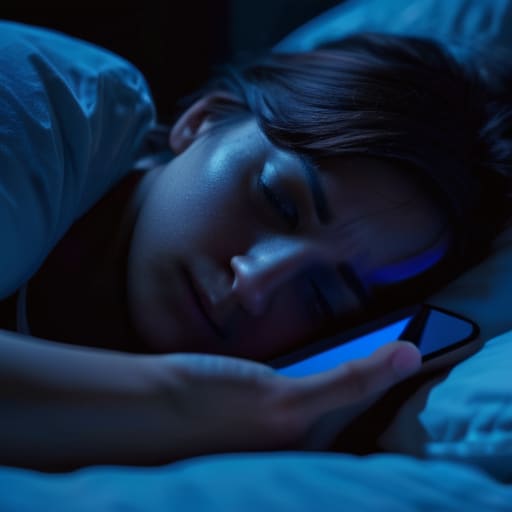
We’ve all been there: it’s 11:30 PM, you’re exhausted, but you’re still scrolling through a thread of something completely irrelevant. It feels like a way to unwind, but physiologically, you’re actually just sabotaging your rest. The blue light impact on sleep is real because that specific wavelength tricks your brain into thinking it’s still daytime, suppressing the melatonin you desperately need to drift off. When you suppress that signal, you aren’t just staying awake; you’re essentially telling your internal clock that the sun hasn’t set yet.
The fallout isn’t just about having trouble falling asleep, though. It’s the brain fog that hits you at 2:00 PM the next day. Because your sleep quality was compromised by that late-night scroll, you wake up feeling unrefreshed, which usually leads to more mindless phone use as a way to cope with the fatigue. Developing healthy tech habits isn’t about punishing yourself; it’s about recognizing that the light from your screen is a chemical disruptor. If we want to feel less like zombies, we have to stop treating our phones like nightlights.
Low-Effort Systems for When You Lack the Willpower
- Stop trying to do a “digital detox.” It’s too intense and usually fails by Tuesday. Instead, try the “one room rule”—pick one area, like your bedroom or the dining table, and make it a strictly no-phone zone. It’s much easier to manage one room than it is to manage your entire life.
- Use your phone’s “Greyscale” mode. Honestly, half the reason we keep scrolling is because the bright, saturated icons are designed to trigger dopamine. When your screen looks like a depressing 1940s newspaper, it loses its psychological grip on you almost instantly.
- Move your most “infinite” apps off your home screen. If you have to swipe three times and look through a folder just to find Instagram or TikTok, you create a tiny bit of friction. That split second of extra effort is often enough to make you realize, “Wait, I don’t actually want to be doing this right now.”
- Buy a cheap, basic alarm clock. I know, it sounds retro, but the biggest mistake I made was using my phone as an alarm. It meant the very first thing I did every morning was scroll through emails or news while still half-asleep. Keep the phone across the room—or better yet, in another room—so you aren’t tempted to scroll before your feet even hit the floor.
- Set “low-stakes” boundaries for your evening wind-down. Instead of saying “no screens after 8 PM,” which feels impossible, just try “no screens while I’m in bed.” You can still watch a show on the TV or read a book, but you’re removing the specific habit of mindless scrolling while lying under the covers.
The Bottom Line
Stop aiming for a “digital detox” and start aiming for small, friction-filled boundaries that don’t require massive willpower.
Pay attention to how your eyes and energy levels actually feel, rather than just counting the minutes on a screen-time tracker.
Focus on creating “phone-free zones” in your physical space—like your bed or the kitchen table—to break the habit of mindless scrolling.
Small Wins Over Total Overhauls

At the end of the day, reducing your screen time isn’t about achieving some perfect, monastic state of digital purity. It’s about recognizing when the scrolling is no longer serving you and having a few low-effort fallback plans ready to go. We’ve looked at how to spot the signs of mindless looping, how the blue light is actually messing with your ability to wake up feeling rested, and how to set boundaries that don’t feel like a chore. You don’t need to delete every app on your phone to see a difference; you just need to reclaim those small, stolen pockets of time that currently disappear into the void of an infinite feed.
If you’re feeling overwhelmed by the idea of “unplugging,” just start with one tiny, repeatable win. Maybe it’s leaving your phone in the kitchen while you water your plants, or simply putting it in another room for ten minutes when you’re too tired to even think. These aren’t grand lifestyle shifts; they are just ways to make your daily life slightly more manageable. Life is happening in the physical world, in the quiet moments between notifications. Focus on making space for that, and the rest will eventually fall into place.
Frequently Asked Questions
What do I do when my job requires me to be on my phone or laptop all day?
This is where the “all or nothing” mindset usually fails us. If your job requires constant connectivity, a total digital detox isn’t just unrealistic—it’s impossible. Instead, I focus on micro-boundaries. Use a physical timer or a desktop app to force five-minute “eye breaks” every hour. When you’re off the clock, move your charger to a different room. You can’t escape the screen, but you can stop it from bleeding into your actual life.
Are there any apps that actually help without just becoming another thing for me to stare at?
Honestly, most “productivity” apps just end up being another distraction. If you want to avoid the irony of staring at a screen to stop staring at a screen, I recommend sticking to the built-in tools like Apple’s Screen Time or Android’s Digital Wellbeing. They’re boring, but they work. If you need more, try an app like Forest—it uses a tiny bit of gamification to keep you focused, but it’s simple enough that it doesn’t feel like another chore.
How do I stop the mindless scrolling when I'm just trying to decompress after work?
Honestly, the “doomscroll” is my biggest trap when I get home. I tell myself I’m relaxing, but I’m actually just frying my brain. Instead of trying to quit cold turkey, I’ve started a “transition ritual.” I leave my phone in the kitchen and spend fifteen minutes doing something tactile—watering my plants or just sitting with a tea. If I can bridge that first gap without a screen, the urge to scroll loses its grip.


I believe that life doesn't need to be optimized to perfection, just made slightly more manageable. My goal is to help you find systems that actually work when you're tired, not just when you're motivated. Let's focus on small, repeatable wins that clear the path for what actually matters.