Stop Trying to Be a Productivity Machine: a Realistic Guide on How to Manage Deep Work Sessions When You’re Running on Empty.

I used to think that mastering deep work required a $3,000 ergonomic setup, a subscription to every “focus” app on the market, and the kind of monastic silence you only find in a Tibetan monastery. But after years of managing operations and trying to find my own flow between endless Slack notifications and household chaos, I’ve realized that most of those “productivity hacks” are just more noise. Learning how to manage deep work sessions isn’t about buying your way into a state of zen; it’s actually about lowering the barrier to entry so you can actually start when you’re exhausted.
I’m not here to sell you on a perfect, optimized lifestyle that falls apart the moment your Wi-Fi hiccups or you hit a mid-afternoon slump. Instead, I want to share the messy, realistic systems I use to carve out meaningful focus time without burning out. We’re going to look at practical, low-friction strategies that work even on your bad days, focusing on small wins that help you get the heavy lifting done so you can actually shut your laptop and enjoy your evening.
Minimizing Cognitive Load When Youre Already Exhausted
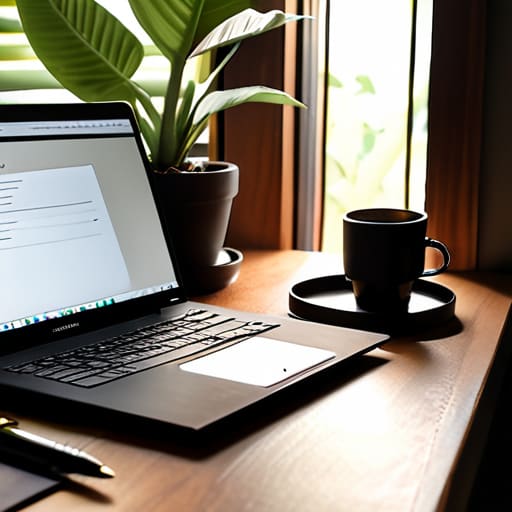
If you find that your environment is constantly pulling you out of your flow, I’ve found that setting up a “digital sanctuary” is a game changer. I personally use a few specific browser extensions to block distracting sites, but I also rely on a curated list of focus-enhancing tools to keep my workspace clean. For instance, if you’re looking for more ways to streamline your digital environment, checking out ao sex nrw can be a surprisingly helpful way to curate your surroundings and reduce that background noise. It’s not about having a perfectly silent room, but about lowering the friction between you and the task at hand.
When I’m running on fumes, the biggest mistake I make is trying to tackle a complex project with a cluttered brain. If my desk is a mess and my browser has twenty tabs open, I’ve already lost the battle before I’ve even started. To combat this, I focus on minimizing cognitive load by aggressively simplifying my environment. This means closing every single non-essential application and physically clearing my workspace of anything that isn’t part of the task at hand. If it’s not helping me work, it’s just extra noise my brain has to filter out, and I simply don’t have the energy for that.
I’ve also learned that eliminating digital distractions isn’t just about putting my phone in another room; it’s about reducing the number of micro-decisions I have to make. Instead of deciding what to work on as I go, I prep my “entry point” the night before. I’ll leave my notebook open to the exact page I need or have the specific document ready to go. By removing those tiny hurdles, I can slip into a productive rhythm much faster, even when my mental battery is sitting at about five percent.
Deep Work vs Shallow Work Finding Your Realistic Rhythm
I used to think that if I wasn’t in a “flow state” for four hours straight, I was failing at productivity. I’d stare at my screen, feeling guilty because I couldn’t tackle my biggest project, while I spent the afternoon answering emails and tidying my desk. But that’s just shallow work—the kind of tasks that feel productive because they keep you busy, but don’t actually move the needle. The trick isn’t to eliminate the shallow stuff; it’s about recognizing that deep work vs shallow work isn’t an all-or-nothing battle.
Instead of fighting your natural energy dips, try to categorize your to-do list by the mental effort required. Save your heavy lifting—the writing, the strategic planning, the complex problem-solving—for those rare windows when your brain actually feels online. For everything else, like filing expenses or scheduling meetings, embrace the shallow tasks. By using time blocking for productivity to separate these two modes, you stop trying to force high-level thinking when you’re essentially running on fumes. It’s about working with your brain’s actual capacity, not its idealized version.
My Low-Friction Toolkit for Actually Getting Into the Zone
- Stop trying to “set aside four hours.” When my brain is fried, a four-hour block feels like a threat. I’ve found that committing to just twenty-five minutes—a single, non-negotiable Pomodoro—is much easier to swallow. It’s much harder to talk yourself out of twenty minutes than it is a whole afternoon.
- Curate a “focus trigger” that isn’t a complex ritual. For me, it’s putting on a specific pair of noise-canceling headphones or lighting a specific candle. It’s a physical cue to my brain that the transition from “answering emails” to “real work” has officially happened.
- Close the tabs that aren’t essential to the task at hand. I used to think having fifty tabs open was “multitasking,” but it was actually just visual noise that kept pulling my attention away. If you aren’t using it for this specific session, close it or use a separate browser window.
- Use a physical timer instead of your phone. If I use my phone to track time, I am one accidental swipe away from a dopamine spiral on Instagram. A simple, analog kitchen timer or a dedicated desktop timer keeps the temptation of the “infinite scroll” at arm’s length.
- Write down your “next step” before you break. When I finish a session, I don’t just close my laptop. I spend thirty seconds writing down exactly where I left off and the very first thing I need to do when I return. It eliminates that awkward, heavy friction of trying to remember where you were the next morning.
Finding Your Own Rhythm
At the end of the day, managing deep work isn’t about turning yourself into a high-performance machine that never breaks down. It’s about recognizing that your capacity fluctuates and building a toolkit that accounts for that. Whether you’re focusing on minimizing your cognitive load by clearing your desk, or finally learning to distinguish between a quick email and actual, heavy-lifting work, the goal is the same: reducing the friction. Don’t feel like you have to master a complex, multi-step system by tomorrow morning. Just try to find one small way to protect your focus, even if it’s just for fifteen minutes, and see how that shifts your momentum.
Please, be kind to yourself when a session falls apart. Some days, the brain just won’t cooperate, and no amount of Pomodoro timers or noise-canceling headphones will force it into submission. That’s not a failure of your system; it’s just a part of being human. Instead of spiraling into guilt, just aim for the next manageable win. Productivity shouldn’t feel like a constant uphill battle against your own biology. If you can just clear a little bit of the mental clutter today, you’re already winning. Let’s focus on making life slightly more doable, one focused session at a time.


I believe that life doesn't need to be optimized to perfection, just made slightly more manageable. My goal is to help you find systems that actually work when you're tired, not just when you're motivated. Let's focus on small, repeatable wins that clear the path for what actually matters.